Restaurant order fulfillment looks simple from the outside. A customer taps confirm. The restaurant gets the order. The food gets made. A driver picks it up. Simple.
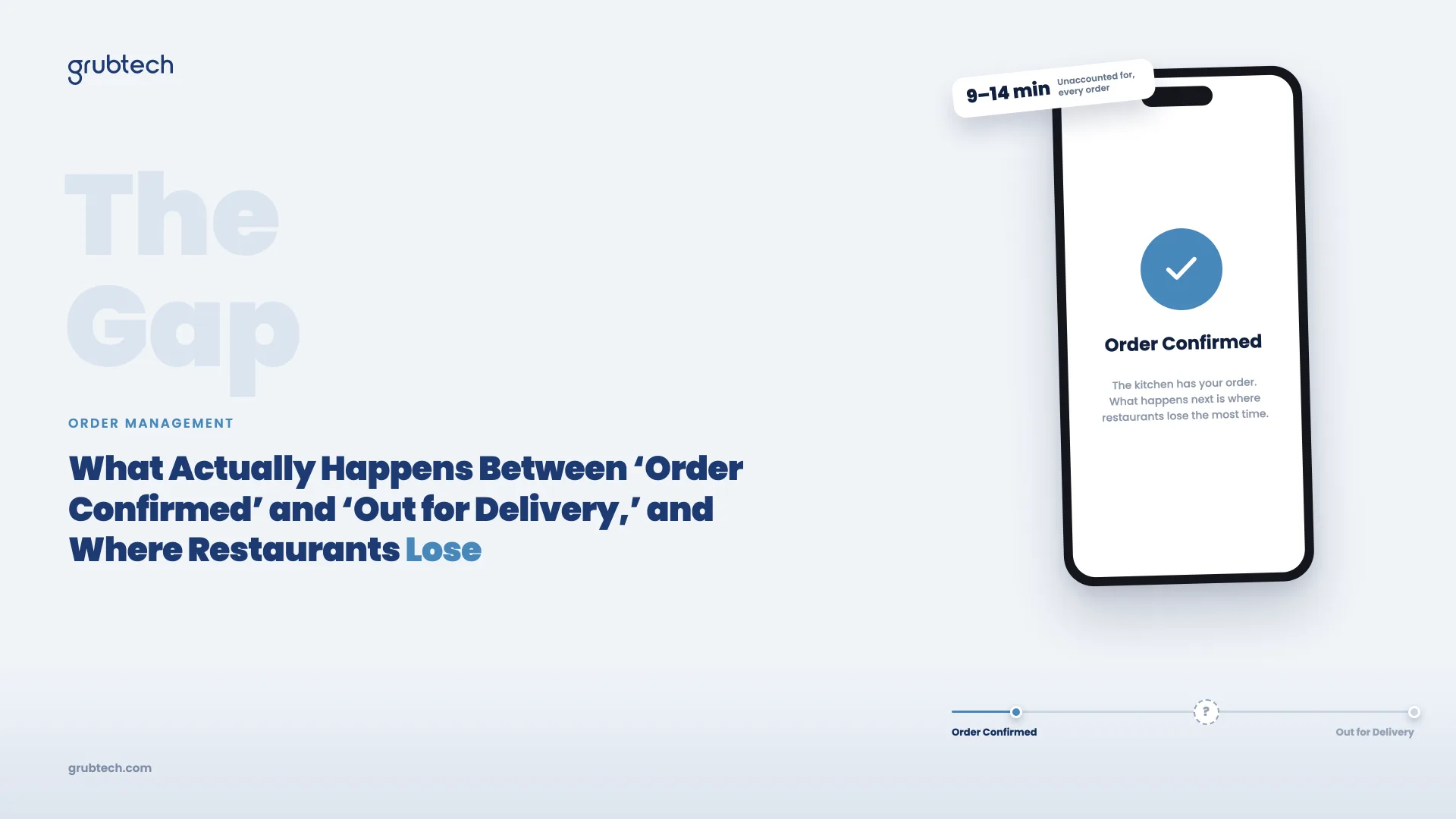
But between that first notification and the moment the driver's status changes to "out for delivery," there are at least six handoffs where something can go wrong. And in most restaurants and dark kitchens, at least one of them does, every single service.
The customer never sees these handoffs. They only see the result: a late order, a wrong item, a cold meal, and a rating they will never take back.
Industry research shows that more than 60% of negative food delivery reviews cite late delivery or order accuracy issues, both of which originate in the fulfillment gap between kitchen output and driver dispatch.
The restaurant order fulfillment gap most operators never see
Why do food delivery orders get delayed after they are confirmed?
Most restaurants measure kitchen performance from the moment an order reaches the KDS to the moment it is marked ready. That is the visible part of the process.
What happens before and after is where the delays actually live.
Before the kitchen, the order has to travel from the delivery aggregator, through the POS integration, and into the kitchen display system. If any of those connections adds latency or drops context, the kitchen starts the clock late.
After the kitchen, the food is ready, but the driver is not. Or the driver is there, but the order is not marked as ready in the dispatch system. Or the dispatch system is not connected to the kitchen at all, so the driver finds out the same way the customer does: by waiting.
This is the fulfillment gap. It is not a kitchen problem. It is a coordination problem.
Where restaurants and dark kitchens lose control of food delivery orders
Where do most food delivery order errors happen between confirmation and pickup?
The fulfillment gap has four specific failure points, and they apply equally to full service restaurants, dark kitchens, and retail food operations.
Order receipt delay
The aggregator confirms the order instantly. The kitchen gets it seconds or minutes later, depending on how many systems the order passes through. Every second of that delay becomes part of the customer's wait time.
Kitchen and dispatch running separately
The kitchen marks the order ready in one system. The dispatch platform does not know. A driver is allocated based on estimated prep time, not actual readiness. The food sits. The customer waits.
Item unavailability handled too slowly
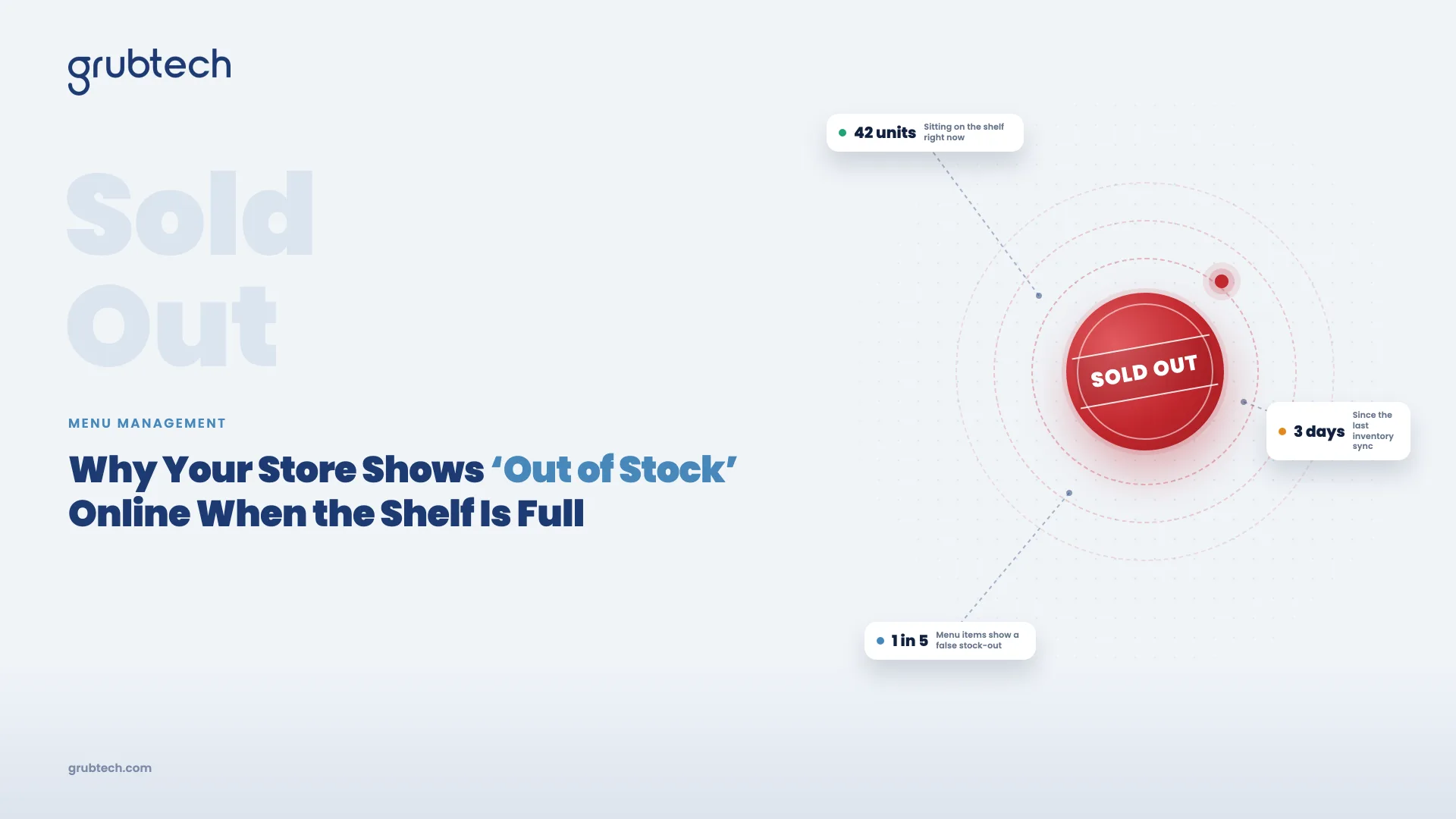
A product runs out mid service. In a connected system, it goes unavailable everywhere in seconds. In a fragmented one, orders keep coming in for that item while the team updates each platform manually. Refunds and complaints follow.
No visibility into the full order journey
The kitchen knows its part. Dispatch knows its part. But nobody has a live view of the complete journey from order confirmed to out for delivery. When something goes wrong, diagnosing it means checking three systems manually.
The fulfillment gap is not where the food fails. It is where the coordination fails. And for dark kitchens and multi location restaurant groups, the cost of that gap compounds with every order and every branch.
How to reduce food delivery order failures between kitchen and dispatch
How do I connect my kitchen to my delivery dispatch system in real time?
Closing the fulfillment gap requires connecting three things that most restaurant technology stacks keep separate: the order management layer, the kitchen display system, and delivery dispatch.
When these three systems share live data, the fulfillment process changes in a measurable way.
Order receipt becomes instant
A unified restaurant middleware platform normalises orders from every aggregator, including Talabat, Deliveroo, Uber Eats, HungerStation, and Keeta, and delivers them to the kitchen without translation delay.
Dispatch connects to kitchen output, not just order input
When a meal is marked ready on the kitchen display system, the dispatch layer already knows. Driver allocation adjusts to actual readiness, not estimated prep time. Food does not sit. Drivers do not wait.
Item availability updates across every platform at once
When something runs out, one update removes it from every connected aggregator simultaneously. No gap, no manual process, no orders accepted for items the kitchen cannot deliver.
The full order journey becomes visible in one place
Operations managers see every order, at every stage, across every location and aggregator, in real time. When something goes wrong, it is visible before the customer notices.
How dark kitchens and multi location restaurants can fix order fulfillment at scale
How can I improve order fulfillment for my dark kitchen or multi location restaurant?
For a single location restaurant, fulfillment gaps are expensive but manageable. For a dark kitchen running five brands from one site, or a restaurant group operating across ten locations, the same gaps multiply by every brand, every location, and every aggregator running simultaneously.
At that scale, manual coordination is not a strategy. It is a ceiling. The operations teams that remove that ceiling are not working harder during service. They are running a connected infrastructure where the kitchen, the dispatch layer, and the aggregators share the same live data.
Across 16,000+ live locations in 28+ countries, grubtech's unified order management platform connects 350+ integration partners into a single fulfillment flow. The result is fewer delays, fewer errors, and a customer experience that reflects the quality of the food, not the gaps in the system behind it.
Stop losing customers in the gap between confirmed and delivered
Customers do not know about the six handoffs between their order confirmation and the driver leaving the restaurant. They do not need to. What they know is whether the food arrived on time, whether it was correct, and whether they will order again.
Every one of those outcomes is decided in the fulfillment gap. Getting it right is not about working faster. It is about removing the coordination failures that slow everything down.
The kitchen is not where restaurants lose customers.
The gap between confirmed and delivered is.
```