For that item keep arriving in the gap. The result: cancellations and one-star reviews for items the kitchen couldn't fulfil.
None of this is a food problem. All of it is an infrastructure problem.
How to protect food delivery ratings during restaurant peak hour operations
The restaurants that hold their ratings through high-volume nights have made the same four operational decisions:
1. Centralise order flow from every delivery aggregator
Every order enters one normalised kitchen queue regardless of platform. One screen. One flow. No missed tickets from a tablet nobody was watching.
2. Connect kitchen output to delivery dispatch in real time
When a meal is marked ready, dispatch already knows. Driver allocation adjusts to kitchen readiness, not just order placement time. Food doesn't wait. Drivers don't wait.
3. Automate item availability across all platforms simultaneously
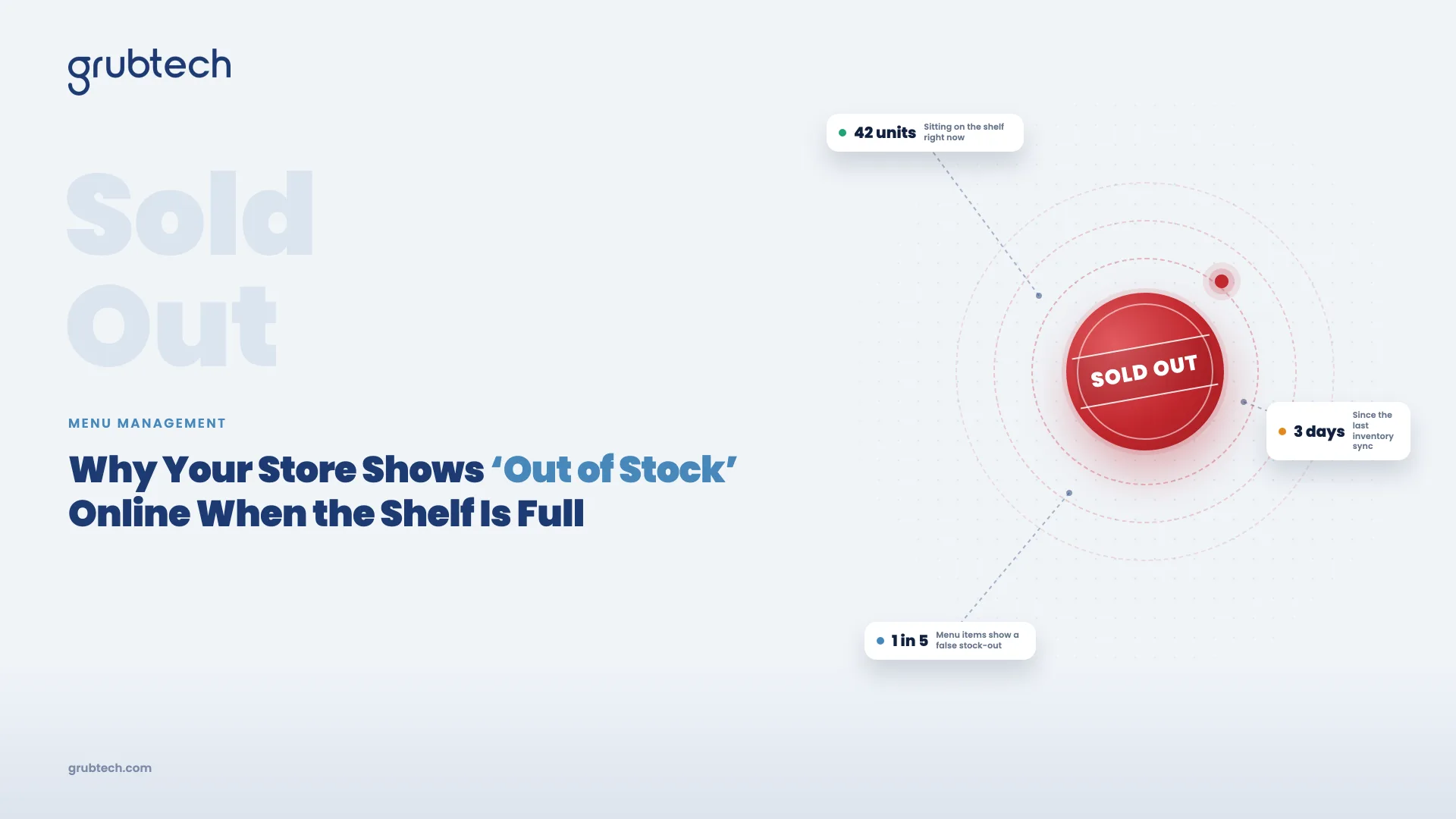
When something runs out, it disappears from every aggregator in the same moment — no manual update, no gap, no orders accepted for items the kitchen can't deliver.
4. Monitor delivery performance live, not retrospectively
Track completion rates, delivery times, and rejection rates during service, not on Monday morning when the damage is already in the reviews.
Across 16,000+ live locations in 28+ countries, grubtech's unified order management and real-time kitchen coordination consistently keeps delivery ratings stable through peak hours, where fragmented systems don't.
Weekend delivery rating drops are an operational signal, not a kitchen problem
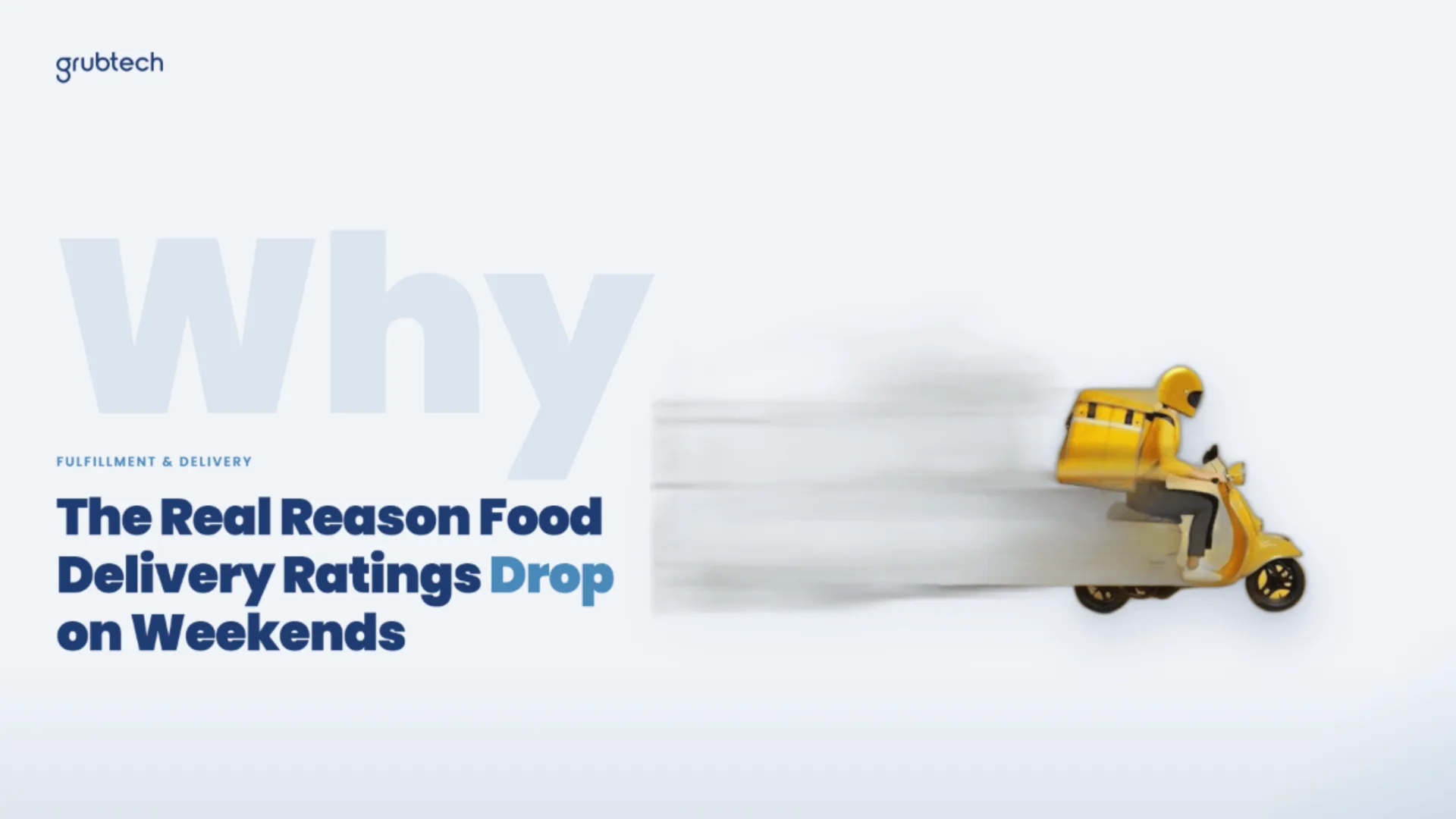
If your food delivery ratings fall every Friday and recover every Monday, the pattern is telling you something precise: your operational infrastructure isn't built for peak volume.
The fix isn't working harder during service. It's removing the gaps that make harder service necessary.
Ratings don't fall because the food gets worse on Fridays.
They fall because the system wasn't built for the volume.